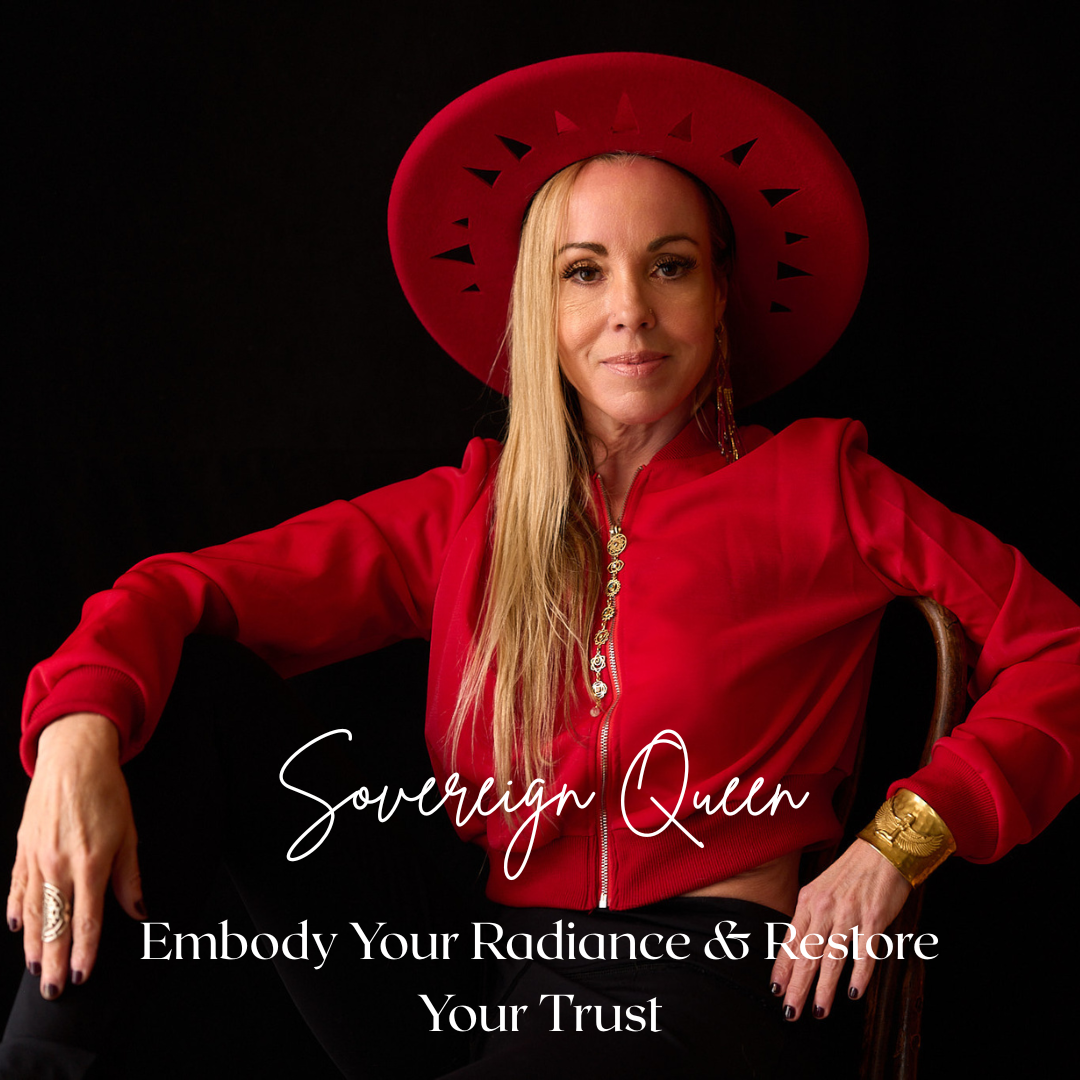
Reparenting Your Inner Child Starts Here
Meet yourself at every age where the wound began — with Inner Child Healing Exercises | Age Stage Healing.

Why Reparenting Your Inner Child Changes Everything
Real change doesn't come from more insight — it comes from going back and meeting yourself at each age where the pattern took root. That's what reparenting your inner child actually means: stage by stage, not all at once. Not sure if you can do this on your own or need guided support? See Reparenting Your Inner Child: DIY vs. Guided Support. Not ready to book a session? Get the free Inner Child Healing Exercises PDF below.

Reparenting Your Inner Child | Age Stage Healing
You know the moment. The one where you feel it happening again.
A relationship starts to feel like the last one. A comment from your boss sends you spiraling for the rest of the day. You finally get close to something good — a person, a project, a version of your life you actually wanted — and some invisible hand pulls you back before it can last. You have read the books. You have done the therapy. You have journaled your way through every insight there is to have. And still, underneath all of it, the same thing keeps happening.
You are not broken, and you are not doing it wrong. You are managing a pattern instead of ending one, because nobody has taken you back to where it actually started.
Here is the truth almost nobody tells you. That pattern is not one wound. It is eight of them, one laid down at each stage of your life, and every single one has an age on it. Healing it starts with reparenting your inner child, one stage at a time.
What is age stage healing?
Age stage healing is a coaching method that walks you back through each stage of your development, from infancy through the wisdom years, to find where a pattern first took root and restructure it at the source. We spend real time, a year to a year and a half, moving stage by stage through what we find: reparenting the part of you that did not get what it needed at that age, repatterning the belief that formed there, and restructuring how it lives in your consciousness now. This work draws on my training in Spiritual Psychology at the University of Santa Monica and the developmental stage framework Erik Erikson mapped decades ago. For the fuller picture of what this looks like, read What Is Age Stage Healing? and How Does Age Stage Healing Work?
Here is where your patterns actually started.
Infancy, birth to eighteen months. The question was: can I trust the world? Maybe that looked like a parent who was often absent, depressed, or overwhelmed in your first year and a half. An early separation, an illness, an adoption, a caregiver who came and went. A home where your cries were not consistently met.
If this stage is where it started, it can look like wanting closeness and bracing for it in the same breath, now. Wanting to be held and flinching from it. A quiet, constant wariness around depending on anyone, even people who have done nothing to earn your suspicion. Reaching for food, a drink, a cigarette, anything, rather than reaching for a person, because a person once felt too risky to need.
It can also look like a hard time even naming what you need out loud, because some part of you decided long ago that asking does not work, and needing people has started to feel like it will end in either being left or being smothered.
Toddlerhood, eighteen months to three years. The question was: is it okay to be me? Maybe that looked like being shamed for saying no, for having an accident, for asserting what you wanted. Being told to stop crying, stop being dramatic, stop making a scene.
A parent who did everything for you so you never got to try, or who ridiculed you when you tried and failed. If this is where it started, it can look like never learning how to say no, now. Saying yes when you mean no, then resenting the yes for days. Taking on someone else's mood as if it were your job to fix it. Feeling smothered the exact moment someone gets close, because closeness once meant losing yourself to keep the peace.
It can also look like going quiet about what you actually feel, because a much younger you learned that saying it out loud led to rejection or ridicule, and boundaries that are either nonexistent or so rigid nothing gets through.
Early childhood, three to six. The question was: is it okay for me to act, to want, to try? Maybe that looked like being mocked or punished for asking questions, for wanting something, for trying something new and getting it wrong.
Being told your ideas were silly, that you were too much, that your wanting itself was the problem. If this is where it started, it can look like perfectionism that never lets up, now, and shame the second you fall short of it. A pattern of using physical closeness as the only language you trust for real connection. A deep, quiet sense that you did something wrong once, somewhere, that you are still atoning for and cannot name.
It can also look like a strange self-consciousness about your own body, creative ideas you talk yourself out of before anyone else can, a low tolerance for other people's mistakes that never quite extends to your own, and a hard time deciding anything without a small trial of guilt attached to the choosing.
The school years, six to twelve. The question was: am I capable? Maybe that looked like being compared to a sibling or classmate and always coming up short.
Harsh criticism of your grades, your effort, your mistakes. Growing up around financial instability where money was used to control or shame you, being told you were a burden, or blamed for what things cost. Not being allowed to pursue the one thing you were actually good at. If this is where it started, it can look like never feeling like enough, now, no matter how much you accomplish.
Over-functioning at work and in relationships so no one discovers you are not as capable as you seem. Going quiet and small in the exact rooms where you most need to be seen, because being seen once felt like a risk. It can also look like starting far more than you finish, a private dread of speaking in front of a room, a strange comfort in staying financially stretched rather than stable, because stability once felt unsafe in a different way, and a habit of noticing everyone else's mistakes while struggling to admit your own.
Adolescence, twelve to twenty. The question was: who am I, apart from who everyone needed me to be? Maybe that looked like being shamed for your body, your sexuality, or the choices you were starting to make on your own. A parent overly critical of your friends, your appearance, your decisions.
Being punished for standing up for yourself, or living through a divorce, a move, or a family crisis right in the middle of trying to figure out who you were. If this is where it started, it can look like an outsized need for other people's approval before you can feel okay, now. Controlling or over-involved in a partner's life, because their steadiness feels like the only thing keeping you steady.
Reluctance to fully commit, not because you do not want closeness, but because committing means someone finally sees all of you. Hypersensitivity to criticism that still lands like it did back then. It can also look like a real shyness around your own body or desire, reaching for something outside yourself whenever the discomfort gets loud, swinging between rebelling against anything that looks like authority and being almost too obedient to it, a fear of standing out that keeps you smaller than you actually are, and a private sense that you are somehow inadequate, dressed up as confidence for everyone else to see.
Young adulthood, twenty to thirty-five. The question was: can I really let someone in? Maybe that looked like a betrayal or a breakup that taught you closeness was not safe. Watching a parent's marriage fail and quietly deciding that intimacy always ends badly. A family or cultural message that people outside your circle could not be trusted.
Isolating yourself after a loss because it hurt less than staying open. If this is where it started, it can look like avoiding real intimacy while telling yourself you want it badly, now. Making agreements you quietly do not keep, or choosing partners who never ask you to keep them. A coldness that shows up right when things start to feel real, not because you do not care, but because closeness once meant losing yourself, and part of you is still protecting against that.
It can also look like keeping your circle small and guarded, trusting only the people who already think and live like you do, a quiet fear of losing control the moment you actually let someone matter, and relationships that look fine from the outside but feel, privately, a little empty.
Full adulthood, thirty-five into your later years. The question was: does what I am building actually matter? Maybe that looked like a career setback, a layoff, or a dream you quietly shelved and never grieved.
Being told your work was not good enough, so you stopped trying. Years spent caretaking everyone else, with no time left for your own creativity. If this is where it started, it can look like stagnation dressed up as busyness, now. Resistance to your own creativity. A sense of running in place no matter how much you produce, or a quiet dread that you are wasting the years while everyone assumes you have it together.
It can also look like a real resistance to investing in anyone coming up behind you — mentoring, guiding, pouring into someone younger — because some part of you is still waiting to be poured into yourself, and a restlessness that gets labeled a midlife crisis when it is really grief for a version of your life that never got to happen.
The wisdom years. The question is: can I look back and call this life mine? Maybe that looked like watching a parent or elder face the end of their life with visible regret.
Being told, in ways spoken or not, that your choices were wrong or wasted. A life spent meeting everyone else's expectations, with no room left to ask what you actually wanted. If this is where the charge lives, it can look like regret that shows up in quiet moments, now — a sense of having lived for everyone but yourself, a fear of running out of time to finally become who you actually are.
It can also look like a rigidity that mistakes itself for wisdom, a creeping cynicism about people and about life, and a habit of replaying old decisions instead of resting in the one you are living now.
This is why the work runs a year to a year and a half. Not because you are slow to heal. Because there are eight stages, not one, and each one gets its own real attention.
What is the difference between age stage healing and traditional inner child work?
Inner child work often treats "the inner child" as one wounded part to comfort. Age stage healing treats your development as a series of distinct stages, each with its own specific wound, its own specific need, and its own specific repair. Curious about the fuller comparison? See Age Stage Healing vs. Inner Child Work.
Where do these patterns actually come from?
Almost always, they come from your family, absorbed long before you had any say in it. A parent's own unresolved fear becomes your caution. A household where love was conditional becomes your adult belief that you have to earn rest. This is what I mean by core patterning — the inherited, often invisible blueprint that shapes how you love, how you work, and how you see yourself, until you can see it clearly enough to change it.
Why has none of what you have already tried actually worked?
Because understanding a pattern is not the same as ending it, and that is the part almost nothing you have done so far actually reaches. Naming your attachment style tells you what is happening. It does not touch why. Therapy gave you language and insight, and both matter, but insight alone rarely goes down to the exact age where the belief was formed and finishes what happened there.
You cannot think your way out of something that was never a thought to begin with. It was a survival strategy, built by a much younger version of you, and it is still running exactly as designed, at every age it was built.
What does the other side of this actually look like?
It looks like staying, when staying used to feel like too much. It looks like someone getting close and your whole body not bracing for the moment it falls apart.
It looks like building something and letting yourself believe it matters, without needing it to be perfect first. It looks like looking back at your life, even now, and starting to like what you see. Real closeness, real contribution, real rest, held without flinching, because the part of you that once needed to flinch has finally been met.
Clients describe it as the strangest kind of relief — watching themselves respond differently to something that used to send them straight into old behavior, and realizing the old behavior simply is not there to reach for anymore.
That is the return to what I call your authentic self, the one underneath the roles, the coping, and the old core patterning. It was never gone. It was waiting for you to come back for it.
The part you are not saying out loud
You are wondering if this is different from everything else you have already spent time and money on. If this is one more thing that sounds true and does not actually move anything.
Here is the honest answer. This is not talk therapy, and it is not another framework to understand yourself through. Age stage healing goes stage by stage, back to where each pattern was actually formed, and does the work of reparenting, repatterning, and restructuring it in your consciousness, so it is no longer running your life from somewhere you cannot see. It is built specifically to go where insight alone does not reach.
You already know your pattern by heart. You have known it for years, maybe your whole life.
“The time I have spent working with Dawn Light has been life changing. I spent decades in psychotherapy, and I have made more progress in the 2 years working with Dawn than in all those years combined. On a scale of 1 to 10, Dawn Light is a 10++++.”
— Cheryl Hillman
Frequently Asked Questions
What is age stage healing, in a sentence?
It is the work of going back to the exact age and circumstance where a pattern was formed, and finally completing what got interrupted there, instead of managing that pattern for the rest of your life. Most approaches to personal growth work from where you are now, forward. Age stage healing works backward first, to the actual origin point, because a pattern rarely lets go until it has been met at the age it started.
How is age stage healing different from therapy?
Therapy is often talk therapy, focused on understanding and processing what happened. In age stage healing, we also talk, but the work goes further than the conversation itself, into actually reparenting, repatterning, and restructuring the belief in your consciousness. Many people benefit from both. If you are in an acute mental health crisis, a licensed therapist is the right first call. If you are stable and ready to actually change something that keeps repeating, age stage healing is built for exactly that.
How long does age stage healing take?
Most people move through the full process over a year to a year and a half, working stage by stage through all eight. This is not a quick fix, and it is not meant to be. Real repatterning takes real time, the same way the original pattern took years to form. That said, many clients feel a shift long before the full process is complete, often as soon as the first stage that holds real charge is worked through.
Do I need to remember everything about my childhood for this to work?
No. Age stage healing does not require perfect memory or a dramatic story. Some of the most significant patterns come from ordinary moments repeated many times, not one traumatic event. We work with what is actually accessible to you, and often the body and the emotions know more than the mind remembers.
Is age stage healing only about childhood?
No, it moves through every stage of development, including midlife and the wisdom years beyond it. A pattern that formed at forty during a season of feeling stuck is just as real and just as workable as one that formed at five. Wherever the pattern took root is where we go.
What can I expect in a first session?
Expect an honest look at your story and a clear sense of where we would begin. We start to map your timeline together and identify which stage is likely holding the most charge right now. There is no pressure to have it all figured out. Most people arrive somewhere in the middle of something, and that is exactly the right place to start.
What does this actually cost?
The first conversation is a free Age Stage Healing Soul Aligned Clarity Call, and it carries no obligation. If we decide to keep going, ongoing work is structured as private coaching, starting at $4,800 for a four-month container, with payment plans available. I have written more openly about pricing in how much does spiritual life coaching cost.
How do I know if this is the right fit for me?
You do not need to have it figured out before we talk. If something in what you just read felt familiar, that is usually enough of a sign to have the conversation. The call itself will tell you more than any amount of thinking it over in advance.
The only thing that has been missing is going to where it started, instead of meeting it again tomorrow.
Not ready to book a session yet? Download your Inner Child Healing Exercises PDF below — a guided first step into reparenting your inner child, at your own pace.
CLICK HERE TO BOOK YOUR REPARENTING CALL
This is where it stops repeating. Book the session.
There’s no pressure on this call — we simply see if we’re aligned. If we’re not, you’ll still walk away with clarity.
Inner Child Healing Quotes
A few reminders for the part of you that is still waiting to be met.
"Your inner child does not need you to be perfect. She just needs you to finally stay."
"Healing is not about becoming someone new. It is about coming home to who you were before the world told you to hide."
"The child in you was never asking for too much. She was asking for someone to stay long enough to prove she was safe."
"You cannot think your way out of a wound that was never a thought to begin with. You have to go back and meet it."
"Every pattern you keep repeating is a message from a much younger you, still waiting to be heard."
"Reparenting yourself is not about blaming who raised you. It is about finally becoming who you needed all along."
"The part of you that learned to disappear to stay safe is allowed to take up space now."
"You do not have to keep managing the wound. You are allowed to actually heal it."
"What you needed at five, you can still give yourself now."
"The relief is not in forgetting what happened. It is in finally being met where it happened."
— Dawn Light Amora
Download Your Inner Child Healing Exercises PDF
Not ready to book a session yet? Download your Inner Child Healing Exercises PDF. It walks you through all eight developmental stages so you can start recognizing where your own patterns began — no strings attached.
Download Your Inner Child Healing Exercises PDF
Enter your name and email to get instant access to the PDF.
Adding your phone number is optional. If you do, you agree to receive occasional text messages from Dawn Light Amora about live events and offers. Message and data rates may apply. Reply STOP at any time to opt out.